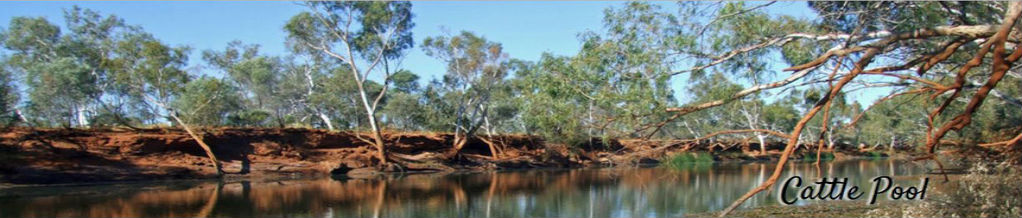
The photographs are from the A R Richardson collection of photographs and have been colorized. The preamble regarding the station are from the J.S. Battye book called the History Of the North West.
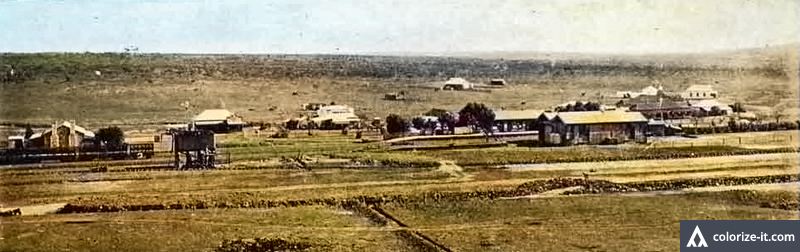
Thomas Burges and John Sidney Davis explored to the east of Tibraden Station in 1870. Following the Greenough River through the area of Cockatea (Kockatea) towards the Dividing Range. Mr Burges's holding became known as Yuin Station and Mr Davis selected the land around Tallering Peak (Station).
Mr Davis proposed to Mr Burges, Maitland Brown and Mr Charles Shenton in 1871 that they should explore the land to the east of Yuin Station, where he had heard of the ore Cinnibar being found by the natives. They traveled 8 days to where Mt Luke stands and found Austins track from 1854. Upon returning home they reported good pastoral land in the Twin Peaks district. A young Aubrey Brown along with Mr Davis's native left a short time after they arrived home, to inspect the area further.
Between the years 1872 and 1885 there were at least 12 stations created in the vincity of the Sanford, Upper Murchison and Roderick Rivers.These stations were the the first to the north east of of Mullewa.

Yuin Station, the property of Mr William Burges is situated twenty miles north of Pindar, the siding of the Murchison railway line used by the station and has forty miles of double frontage to the Greenough River.
It was estabished in the early 1870's by the late father of the present owner and possesses an area of 420 000 acres, of limesttone and granite country mostly undulating in character, but with wide flats extending back from the river.
Salt bush, cotton bush, karrara, blue bush, and other varieties of top feed give a good drought resisting quality to the station. In years when the rainfall has been normal, abounds in nourishing grasses, very fattening to the stock.
Wells form the chief means of water supply and over thirty windmills have been erected. Twenty seven paddocks have been formed, varying in size from 5000 up to 20 000 acres.
In good seasons, pasture as many as 25 000 sheep, 150 cattle and 60 to 70 horses. The flock has been built up on the far-farmed Boonoke type and has attained a reputation for weight of fleece and quality of wool, the latter commanding very good prices.
The homestead and outbuilding are composed of solid masonry, the stone being used perculiar to this part of the district. They have now stood for forty years and are in every respect up to date.
The dwelling house contains five or six rooms with numerous outbuilding. Among these, the wool shed ranks first in importance, being a large stone building with twelve Wolseley sheep shesring machines that are powered by a 9 HP Tangye engine.
The owner Mr William Burges does not live on the station, which for many years past has been under management of Mr R W Tremlin.
Reginald W.M Tremlin, manager of Yuin Station in the Lower Murchison district was born on the Peel River, Tamworth NSW on July 24 1874. He is the son of Mr A R Tremlin of Enfield in the same state who came from Kent, England in the early 1860's
The gentleman under review was educated at Newington College NSW until 15 years of age. He then joined his father on the family property on the Hunter River.
After some years on this estate he began to seek wider scope and proceeding to queensland followed the calling of the reef. Three years in the store keeping line at this center followed, which terminated upon his receipt of an offer to undertake the duties of overseer at Yuin Station under the management of Mr P Turnbull.
After holding this position for two years in 1908 he was promoted to post of manager. He was married in October 1913 to Edith, daughter of Mr John Brand, contractor of the Murchison district.
In the year 1863, what is known as the coast disease was prevalent amongst sheep near Geraldton, and amongst the sufferers was Mr T. Burges of the Bowes station. Up to this time only Gregory and Austen, the explorers, had passed through the Murchison country.
As he was hard pressed for a change of food for his sheep on account of the disease, Mr Burges decided to despatch Perks, who is now manager of the Murgoo station into the bush in search of sheep country. Guided by a single native, Mr Perks pushed his way into the bush, travelling up the Greenough River and then on until he had reached a point about thirty miles above Yuin.
In this plucky trip, Mr. Perks found the natives afraid of him, but not hostile. Few of them had ever seen a white man. Mr. Perks saw the salt bush, and knowing its feeding qualities, he went back and reported favorably on the country.
There were, however, many strange bushes in this new country that might prove poisonous to stock, and it was decided at that time not to bring up sheep. Nothing further was done in the matter until about 1867, when Mr Burges, finding the coast disease getting very bad, decided to have the Murchison country further examined. Mr. Perks again pushed his way through the bush to the Yuin country, and this time made a very thorough examination of it.
Returning to Mr Burges, the explorer reported again favorably, and it was decided to send two flocks of a thousand each to this new land. The sheep were traveled through the bush until they came on to the salt bush country, and then they were moved about from place to place as the water served.
It was found that these sheep did well and that there were no losses from poison. Indeed poison is found on the Murchison in one plant only, and that is very scarce and only grows near creeks. Encouraged by the experiment, Mr. Burges continued to send up sheep to the country, and in 1869 established the Yuin station.
CORRESPONDENCE The Geraldton Express 1907 January 28
Quite a
leading figure in the Murchison pastoral country is Mr. John Hearn, the owner of Gabyon station. He has passed all his life among stock and coming West from the Kelly country in Victoria over a dozen years ago, he became manager of Nookawarra, the cattle side of his keen judgment in determining the Boolardie station, owned by Frank Wittenoom.
Leaving there he engaged in droving and cattle dealing with the success of the man who knows the game thoroughly, and has the strength and energy to carry out his purpose. Many good tales are told of his keen judgment in determining the average weight of a flock of sheep and his adroitness in endeavoring to lead the purchaser to "kill" rather than accept his estimate of the weight.
In nearly all cases the man who chose to kill had to pay a higher average than J.H. was asking. Is a man of few words, but is an entertaining companion to those who know him intimately. Bought Gabyon station, in partnership with the late H. Mostyn Molony, of Murgoo, and after the latter died he bought the property right out.
Recently purchased Michael Brown's estate at Arrino, and is supposed to be one of the "warmest" of pastoralists up his way. Married a few years ago Miss Freeman, a charming belle from Port Pirie, and they make the homestead at Gabyon an ideal place for guest or sundowner.
- 1873 Thomas Burges, Sir Edward Wittenoom, David Judge
- Charles Bush leaves Murgoo on the 23rd of October 1879 for the Gascoyne.
- Henry Moyston Molony and Richard Holmes acquired the property in 1890.
- John Perks manager 1885 - 1891
- Edward Charles Atkins acquires the property in 1905
- Mr. J. H. Carter, manager 1907
Murgoo
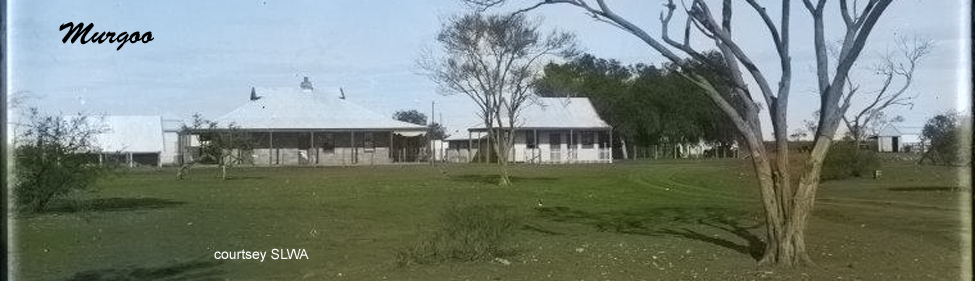
PIONEER OF THE MURCHISON Western Mail 1918, June 21
Mr. John Perks, the original pioneer of the now well-known Murchison country, passed away peacefully on May 17 last at Bewdley, Worcestershire, England, on his 86th year, writes Mr. F. Wittenoom. He arrived in this State in the early fifties. About 1854 he was employed by the iate Mr. Thomas Burges, of The Bowes, Northampton and remained in his employ for twenty years until 1874.
During that time the late Mr. Perks went with Panter, Harding and Goldwire with sheep, to Roebuck Bay, and was there when they were murderered by natives. He had many stirring stories to tell of those days of hardship and danger. He returned from there to The Bowes, and being a good aboriginal linguist he made periodical trips East with the blacks and his gun, taking no provisions. By this means he got out towards Tallering Hil (now part of Messrs. Elliott and Cornish's station).
Later, he persuaded Mr. Burges to allow him to take two flocks of ewes away to this country for a year and returned with good results at shearing time. He then started off with several flocks and got as far as the present Yuin station, as well as over to Ballinyoo on the Murchison River. At this time the country was absolutely unknown lo whites. Being successful in this venture, Mr. Burges took up leases of what is now the Yuin station, and our pioneer continued for two or three years to take charge of several shepherds and had a few wells sunk. On one occasion he described great mortality amongst the blacks from small pox.
In 1874 with (now) Sir Edward Wittenoom, I leased Mr. Burges's Yuin station and sheep, and John Perks was our able assistant, his bush experience and general knowledge of the natives being of inestimable value. With Sir Edward Wittenoom, he afterwards explored and took up what are now known as Murgoo and part of Boolardy stations, and with myself, later. Nookawarra, Mileura, and Belele stations. He remained with us until 1892, when he went to England on a pension, married, and adopted two nieces.
After being there some years, he returned and took the management of Meka station, but as age was beginning to tell he returned lo England and after unsuccessfully trying hotel keeping he retired to Bewdley in Worcestershire. He was a wonderfully well self educated man with refined areas, a great reader, a good sportsman, a fearless pioneer, a fine bushman, and a true friend. He kept in touch with Western Australia to the last and the State never had a stronger supporter in England. I feel sure these few lines, which very shortly and imperfectly give a sketch of the first pioneer of our Murchison country will be read with interest by many of his old friends.
THE MURCHISON The West Australian 1886, May 31
Murgoo owned by Wittenoom Bros,lays southward of Nookawarra and to the eastward of the Murchison and is 200 miles from Geraldton; this and the Yuin stations were the first runs occupied in the back country. Yuin, the property of Mr. T. Burges, has of late years been severely affected by drought aud around the homestead the country is very bare. Here there is a fine shearing shed, store
THE GOVERNOR'S TRIP TO THE MURCHISON. The West Australian 1887, November 9
Murgoo, the station at which we are now staying, forms only a portion of what may be called Wittenoom country. Going by ordinary stages, a traveler would be days before he could get out of the land held by the brothers, Edward and Frank Wittenoom.
An English county of ordinary size dropped upon it, would fall far short from covering it. They are gradually however disposing of their princely estate to enterprising sheep farmers, and I suppose that in a few years, it will have been cut up into a large number of thriving stations. That they hold such a large amount of good sheep country arises simply from the fact that in the early days they were courageous pioneers and also far seeing men of business.
They found a good land, and entered into possession in the firm belief that before long the man of enterprise would come there seeking squatting country. In the early days before the beginning of well sinking, it was very necessary for a sheep farmer to have a large amount of country, so few and far between were the water holes.
After well sinking, paddocking began, and this too was an important agent towards the reduction of the country which it was necessary for a squatter to have. Even with wells, the squatters on the Murchison who do not fence average only a sheep to thirty or a hundred acres, but with fencing it is expected that most of the country will carry a sheep on from six to ten acres.
From the time when the Messrs. Wittenoom began squatting on the Murchison to the present day, a great advance has been made in this important industry, but it is infinitesimal compared to the progress that yet remains to be made. The brothers Wittenoom were, I believe, trained on the Bowes station, near Geraldton, and in 1874 rented the Yuin station, which was then managed by Mr. Perks from Mr. Burges.
There were then 15,000 sheep at Yuin. During their tenancy, they put up substantial buildings at Yuin. In the year 1874, Mr. Edward Wittenoom and Mr. Perks made a trip eastward, and found the country near the Roderick River, about eighteen miles from Yuin.
In the following year Mr. Edward Wittenoom went out on an exploring expedition, attended only by a single native, and pushed his way for three weeks up the Roderick River. He was followed the whole time by a mob of wild natives, who were friendly and showed him all the water holes. During this trip Mr. Wittenoom got up as far as Millybydgine, which is 114 miles from Yuin. By-the-bye, I will not answer for the correctness of the spelling of that native name in the foregoing sentence, but this I can say, I do not believe any one can prove it is wrong. When I was at that place on our way to Nookawarra, I button-holed every old settler and asked him to spell the word. I did not get two versions alike, and so in desperation, I have, in respect to all native names, been obliged to spell phonetically.
To return to my subject, when he had reached Millybydgine, Mr. Wittenoom gave ear to discretion and went back. Soon after this Mr. Edward Wittenoom made an arrangement with Mr. Burges for the starting of a cattle station on the Murchison, and his brother, Mr.Frank Wittenoom, then undertook to explore the country. He pushed his way eastward, and discovered the country which now forms the Nookawarra station.
The station at Nookawarra was formed in 1876 and was placed in charge of Mr. C. Wiseby. Soon after that Mr. E. Wittenoom went on a further exploring expedition, and the result of it was that he and his brother took up a great tract of country between the Murchison River and the Nookawarra brook, obtaining a river frontage of many miles. After living at Yuin for ten years, the Messrs. Wittenoom returned the station to its owner, Mr. Burges, and established themselves at Murgoo.
It was during their stay at Yuin that the Messrs.Wittenoom managed to train natives to shepherding, and caused them to supplant the white shepherds In the early days, the natives were great thieves, and it was necessary to have two white shepherds to every flock, one man to watch the sheep, and the other to watch the rations. Now, however the shepherds on all the stations are natives, both men and women, and on the whole, they do their work satisfactorily. This short account of the career in this part of the colony of the Messrs. Wittenoom, will give some slight indication of their energy as pioneers.
NEWS OF THE WEEK Western Mail 1890, December 6
OCB Geraldton correspondent telegraphed under Tuesday's date : - Messrs E. & F. Wittenoom have sold at a satisfactory figure, their Murgoo Station, to Messrs. Holmes & Maloney, two Queensland squatters, who came he recently seeking investments.
GOVERNMENT GAZETTE The Inquirer and Commercial News 1889 November 8
Roads Board — The appointment of Mr. J. Perks, of Murgoo, as the officer to settle the Murchison Roads Boards electoral list at the Mt. Wittenoom Police Station on November 26th, and also to be returning officer at the Murchison Roads Boards election on November 27th, is notified.
LOCAL AND GENERAL Geraldton Advertiser 1900, July 31
MR. H. M. Molony, of Murgoo, has just returned to the district after a three month visit to Queensland. Mr Molony has brought with him some stud merino rains of rare breeding.These he purchased from the celebrated station owned by F. S. Falkiner and Sons of Boonooke Station New South Wales.
YALGOO MOUNT MAGNET MINER AND LENNONVILLE LEADER 1903 July 25
MR. H. M. Molony of Murgoo Station, Upper Murchison; died at Boolardy, July 16, aged 57.
Mr Maloney, of Murgoo Station, whose death was caused by a coil of wire falling on him, inflicting internal injuries. The medical officer of Mt Magnet went out to attend Mr Maloney but too late to be of service. His Lordship Bishop Kelly accompanied the medical officer to Murgoo.
LOCAL The Evening Mail 1905, October 4
Murgoo , near Yalgoo bought by E. C. Atkins, Claremont for £23,200.
JUSTICES OF THE PEACE Western Mail 1907 May 25
Edward Charles Atkins, of Murgoo, for the Yalgoo district
ROUND OF SOCIETY The Mirror 1907 June 8
Mr. J. H. Carter manager of Murgoo Station, has just returned from N.S.W, where he has been purchasing stud sheep for the station
IMPORTATION OF STUD RAMS The Daily News 1908 May 16
Among the
most recent importations were three merino rams which arrived by the Kanowna yesterday morning. Mr.J. Carter, manager of Murgoo Station, Murchison', who annually visits the eastern' States on behalf of Messrs. Atkins Bros of Murgoo, has been successful in securing some splendid rams which can be classed among the best yet landed in Western Australia.
The stock landed in good condition despite the rather rough weather experienced by the Kanowna during the voyage from Adelaide. The rams were purchased from the well known Boonoke Station owned by F. S. Falkiner and Sons of the Riverina, New South Wales and will be trained to the Murchison in the early part of next week.
- 1873 Frank Wittenoom, Sir Edward Wittenoom
Boolardy
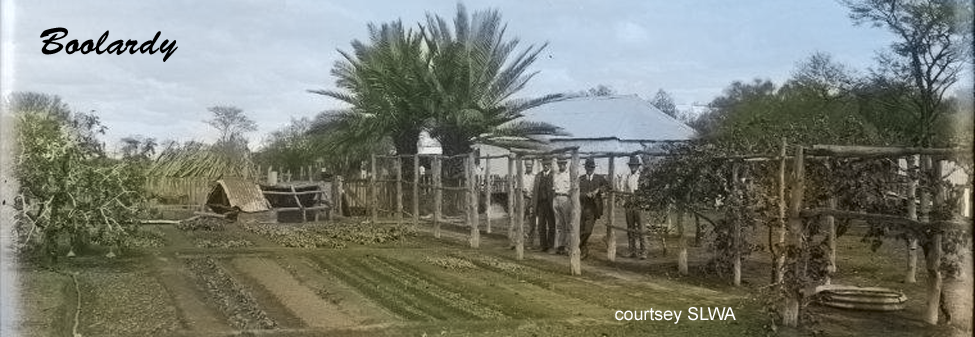
Boolhardy Station situated on the Roderick Creek in the centre of the Murchison district is owned by Mr Frank Wittenoom and consists of about one and a half million acres. This area included the old Manfred and Nookawarra properties, now used as outstations. The latter being devoted to the pasturing 1000 to 1500 cattle.
The country in undulating, fairly grassed and well supplied with salt bush. There is a good variety of top feed in which mulga predominates. Water is easily procured by sinking shallow wells, as many as a hundred wells were sunk in the early sheperding days.
There are about 60 windmills now with newer wells, which with the attendant troughing arrangements make an effective service for watering stock.
At present the property is under stocked due a very dry season. The station can carry 50 000 head of sheep in good seasons. Some 200 horses of mixed classes for station use are kept and camels and donkeys are used for transport purposes.
The homestead dates back to 1890 and has a picturesque appearance, enhanced by the surrounding garden and in addition is one of the most comfortable residences in the murchison district.
Four miles distant in a south easterly direction an up to date shearing shed has been erected with twenty stands are fitted with Moffat Virture machines. Boolhardy is highly improved and ranks among the most the most valuable pastoral properties of the North West.
- 1874 William Silas, George Pearse and Thomas Little
Meka
To the south lies Nookawarra, owned by Mr F Wittenoom, who holds some 500 000 acres and has at present on the run 10 000 sheep under the management of Mr J Judge also 250 cattle and 170 horses of light class. The imported sire Randwick performs stud duties and being descended from Yattendon, son of that greatest of all Australian sires, Sir Hercules, he should leave his mark on the young stock. The country consists of open plains lightly timbered with gum, accacia, mulga, and is watered by clay holes and shallow wells.
We now retrace our steps by way of Yederara and proceed to Nookawarra. This station is about the most central one in the Murchison district and it is here the annual race meeting is held which is attended by the squatters and their employees from far and near. It was originally taken up for a cattle station about 13 years ago by Messrs. E. & F. Wittenoom and Mr. T. Burges.
It eventually fell solely into the hands of Mr. F. Wittenoom who purchased some adjoining country and stocked, it with sheep. It then consisted of about 1,200.000 acres with 12,000 sheep, 1,200 head of cattle an a large number of horses. The Mileura station consisting of about 700,000 acres was subsequently sold out of this property to Messrs. Walsh & Sons with 7000 sheep' and 500 head of cattle. Two hundred head of cattle were also sent to the Meoian cattle station, in fact every cattle station on the Murchison was started from the Nookawarra herd, the herd, being generally recognized as a well bred one. From its earliest stage bulls have been imported from Glenormiston and Messrs Fisher's and other celebrated stations in the Eastern colonies.
The sheep are also a well bred lot the rams being imported from Messrs. Murray, Parker etc, and their progeny from imported Murray ewes, these being the only stock used for the purpose.
Nookawarra was the first station taken up on the Murchison. The herbage consists of fine open salt bush and grass country with plenty of Mulga and other edible shrubs, Water is plentiful and easily procurable. There are about 100 miles of fencing completed here almost all erected by natives and no better fencing can be seen in the district. This year the station has carried only about 3000 choice sheep which were forwarded from Messrs. Wittenoom's station at White Peak just outside Geraldton and about 700 cattle and about 120 horses.
All the horses are very carefully bred. The light sort are mostly by the imported horse Randwick whose stock are now showing up well on the turf. Unfortunately Randwick is dead but his position is now occupied by the well bred colt Habet whose foals this year are of great promise. The cart stock are by the well known imported horse Sultan whose qualities are so highly valued by horse breeders in the district.
The improvements on Nookawarra station are strong and durable and exactly what is required. The wool from this station brought eleven pence in the grease last year and better results are expected this year. We passed a very pleasant time at this most central position. In our humble opinion the Murchison is the best district in the colony and the least the inhabitants can expect is that they should long have telegraphic communication between either Geraldton and Nookawarra or between Carnarvon and Nookawarra.
Mr. F. Wittenoom's wool shed at Nookawarra is nearly completed, likewise are improvements in his homestead, which - will prove especially convenient at race time.
- 1885 Frank and Sir Edward Wittenoom, H. B. Walsh
- 1890-1, 6 bedroom stone house built. Mr. Mcllraith manager 1915.
Mileura
- 1874 Messrs. Reilly and Williams
- J.H. Monger was involved early with Mr Williams and the station was sold to Mr James Sharpe in 1876.
Wooleen

- 1877 John R. O'Grady, G. Woodley
Byro
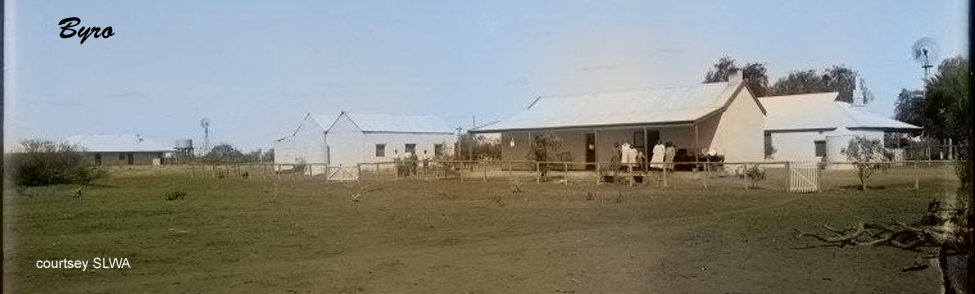
- 1876 Edward William Butcher, Charles John and William James Butcher (sons)
- Purchased and overlanded 2000 sheep from Mr. Nathaniel Cooks property at Arino, to Beringarra in 1878 via the Sanford River, Murgo Station and Boolardy Station (3 months).
Beringarra
One of the finest stations in the colony is Beringarra, the property of Darlot Bros., situate on the northern branch of the Murchison, about 306 miles from Champion Bay. Beringarra runs comprise 400,000 acres which were originally selected by Mr. John Forrest and by Messrs Butcher. The latter, who first put sheep on the country, sold out to Messrs. Campbell & Smith who in turn disposed of the property to the present proprietors three and a half years ago with 8,700 sheep.
So well have these increased that although 1600 have been sold and 1000 lost in a flood there are 16000 now on the station besides the present dropping. The clip, scoured on the station sold in Melbourne in 1884 at l7 d. per lb, and in 1885 at 15 d. which result speaks highly for the wool growing properties of the country. The wool is carted by station teams to Mullawa 65 miles from Champion Bay, and is thence taken in by contract.
The Messrs. Darlot are going largely into fencing and have already thirty miles of 5 and 6 wire fencing erected, Mulga posts being used and found very durable. For building purposes the river gum is sawn out and found very suitable. There is abundance of this timber for station requirements along the river, but no large timber grows on the back country.
A convenient shearing shed for twenty shearers has been erected. Beringarra consists of open plains lightly timbered with stunted gum and accacia, with Mulga ridges behind. The runs are watered by the Murchison through their whole length, and by several clay pools and 30 wells from which abundance of water is obtained at an average depth of ten feet.
The sheep have now a strong dash of the Fisher blood, but latterly 100 stud ewes have been imported from the station of Mr. George Salting, Cunningham Plains, N.S.W., also 150 rams from same stud and 5 from Caromboon.
In large stock there are 60 horses on Beringarra, 25 of which are draughts. With the light herd is a thoroughbred sire by the wonderful steeplechaser Sussex and another by Oli-ver Twist, so that there is little fear of the horse stock deteriorating in quality. A small herd of 30 cattle are kept for station use and they thrive well on this country.
- 1878 Edward William Butcher, Charles John and William James Butcher (sons)
- 1878 Ryan Brothers
New Forest
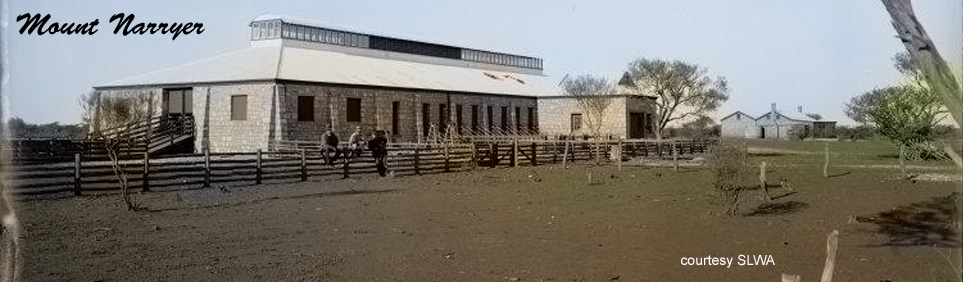
- 1882 Frank Wittenoom
Belele
- 1880's James Mitchell
- 1898 J. C. Mitchell Manager
Yallalong Station
During this time (1875) Aubrey Brown had purchased the cutter "Mazeppa" off John Bateman. It was built in Fremantle (1869), weighed 26 tons and measured 46 ft in length.
Henry Monger and Aubrey Brown then ventured into pearling around the Shark Bay area. He left Geraldton and after exploring Sharks Bay and Dirk Harthog island made his way to the Gascoyne River mouth. In April 1875 an incident on the Mazeppa happened,
A man named Smith has been committed to take his trial at the next criminal sittings of the Supreme Court for the murder of a Malay onboard Mr. Aubrey Brown's cutter, tne Mazeppa. Smith, it appears, had quarrelled with a fellow pearler on board the vessel and in aiming a random shot at him with a revolver, hit a sick Malay, the shot-wound proving fatal.
During 1876 Aubery Brown overlanded 4000 sheep from York via his families Glengarry Station at Geraldton. At the same time Charles Brockman was exploring the area around Mt Clere where he turned west and followed the Gascoyne River. Mr Brockman met Aubrey near the Kennedy Ranges and the pair travelled to the coast. Here Mr Brockman stayed a short while and helped Aubrey build the first house and sheds at Brickhouse.
Whilest engaged in this work George Brockman met Robert Campbell and George Hamersley who had arrived via the coastal route from Shark Bay. Brockman and Hammersley explored the country to the north of Carnarvon and named the Minilya and Lyndon Rivers.
Between the years 1876 and 1885 the Gascoyne and Upper Gascoyne had attracted its earliest settlers.

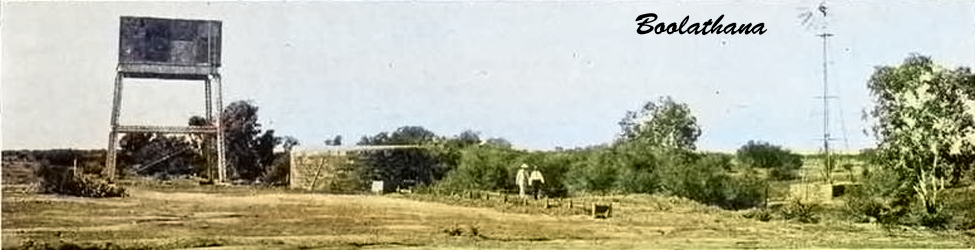
- 1877 Charles Brockman.
Minilya
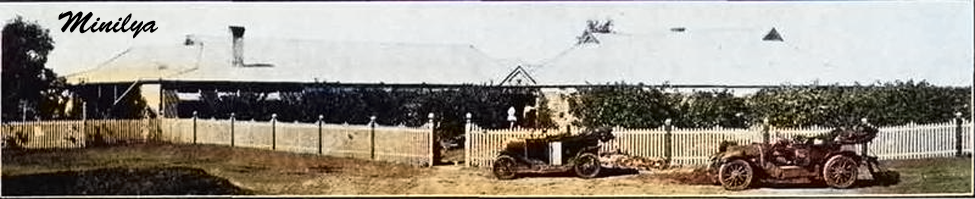
- 1878 G. Hamersley and S. Simms
Jimba Jimba
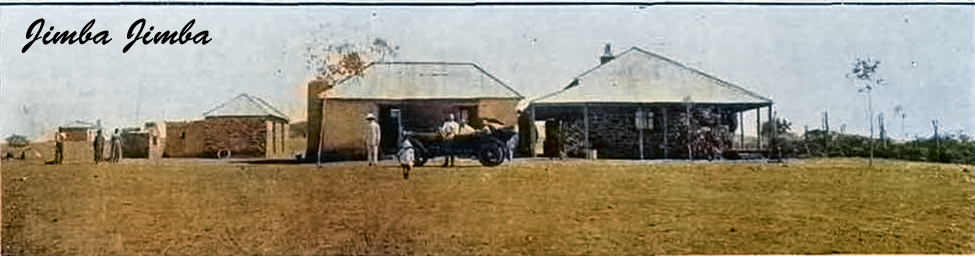

- 1881 Robert Edwin Bush
- Howard and J.E Sewell were the drovers for Roberts first flock. The flocks including Brockmans all waited on the upper murchison till Jan 1881 when the rains came and they could move forward.
- Charles John Butcher appointed manager in 1881.
- Hubert Arthur Lee-Steere (17) jackeroo 1889-1894
Bidgemia


- 1881 Mervyn Corry Richardson Bunbury
Williambury
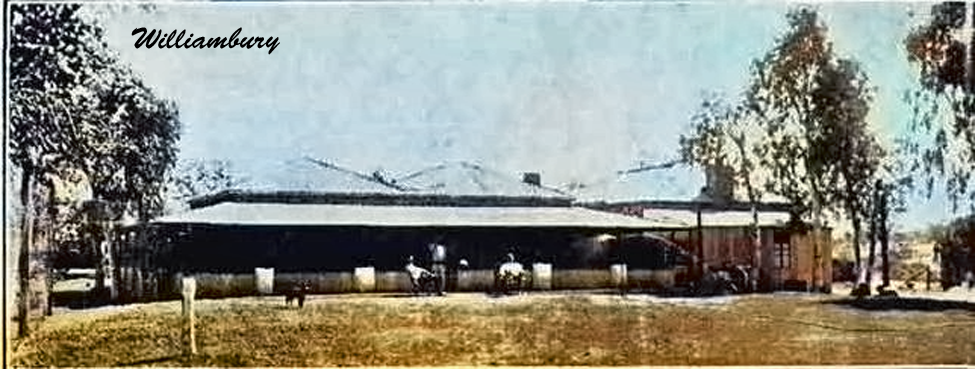
- 1883 John Bernard Fitzpatrick
- Manager at "Cowalla" Moore River for Brockman lessee 1874-8. In the meantime developed "'Baraaba" sold out ln 1882/5 and trekked by wagon to Dairy Creek 160 miles east Carnarvon.
Dairy Creek
- 1884 Frederick Wittenoom, B. J. Carlyon
Three Rivers
- 1885 George Hamersley, Tom Simms
- Sold to S. J. Philips and P Ryan in 1887. Sold again in 1906 to William Hatch
Lyons River
